

Hey there! As a supplier of laser picosecond machines, I often get asked, "How long does a treatment with a laser picosecond machine take?" Well, let's dive right into it and break down all the factors that can affect the treatment time.
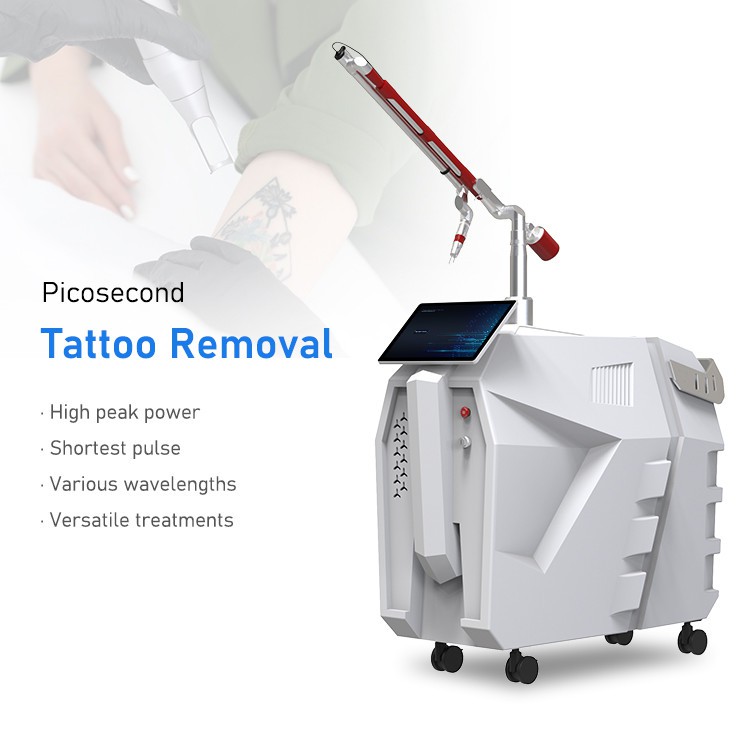
First off, it's important to understand what a laser picosecond machine is and how it works. A Laser Picosecond Machine uses ultra - short laser pulses measured in picoseconds. These incredibly short pulses are highly effective at shattering pigment particles in the skin, whether it's for tattoo removal, treating pigmented lesions, or other aesthetic purposes.
Factors Affecting Treatment Time
Size of the Treatment Area
One of the most significant factors influencing the treatment time is the size of the area being treated. For instance, if you're using the machine to remove a small tattoo on your finger, the treatment might take just a few minutes. On the other hand, if you're dealing with a large back tattoo that covers a significant portion of your back, the treatment could take upwards of 30 minutes or even longer.
Think about it like painting a wall. A small wall will take less time to paint than a large one. Similarly, a smaller treatment area with a laser picosecond machine requires fewer passes of the laser, resulting in a shorter treatment time.
Type of Pigment
The type of pigment in the skin also plays a crucial role. Different pigments absorb laser light at different rates. For example, black and blue pigments are generally easier to break down with a laser picosecond machine compared to red, yellow, or green pigments. Red and yellow pigments are more challenging because they have different absorption spectra, which means the laser may need to be adjusted and more passes may be required to achieve the desired results.
If you're using a Pico Laser Tattoo Removal Machine to remove a multi - colored tattoo, the treatment time will likely be longer due to the need to target each pigment type effectively.
Depth of the Pigment
The depth at which the pigment is located in the skin is another factor. Pigments that are closer to the surface of the skin are easier to reach and break down with the laser. In contrast, pigments that are deeper in the dermis require more energy and multiple passes of the laser.
For example, some professional tattoos are injected deeply into the skin, and removing them can take several sessions, with each session potentially lasting longer than a treatment for a superficial pigmented lesion.

Patient's Skin Type
Patient's skin type can also impact treatment time. Different skin types have different levels of melanin, which can affect how the skin responds to the laser. Darker skin types have more melanin, which can absorb some of the laser energy. This means that the laser settings may need to be adjusted carefully to avoid damage to the skin while still effectively targeting the pigment.
As a result, treatments on darker skin types may take a bit longer because of the need for more cautious and precise laser application.
Typical Treatment Times
Small Pigmented Lesions
For small pigmented lesions like freckles or age spots, a treatment with a laser picosecond machine can be quite quick. Usually, it takes around 5 - 10 minutes per session. These small lesions are typically superficial and require fewer laser passes to break down the pigment.
Small Tattoos
Small tattoos, such as those on the wrist or ankle, usually take about 10 - 15 minutes per session. The laser needs to cover the entire area of the tattoo, but since the area is relatively small, the treatment time is manageable.
Medium - Sized Tattoos
Medium - sized tattoos that cover an area like the upper arm or calf can take anywhere from 15 - 25 minutes per session. The laser has to make multiple passes over a larger area, and if the tattoo has multiple colors, the treatment time may be on the higher end of this range.
Large Tattoos
Large tattoos, such as full - back or full - sleeve tattoos, can take 30 minutes to an hour or more per session. These tattoos cover a large surface area and often have a complex design with multiple colors and deep - seated pigments. Multiple sessions are usually required to achieve complete removal, and each session can be quite time - consuming.
Multiple Sessions
It's important to note that most treatments with a laser picosecond machine require multiple sessions. Pigment doesn't disappear after just one treatment. The shattered pigment particles are gradually removed by the body's immune system over time.
For tattoo removal, it can take anywhere from 5 - 10 sessions, depending on the factors mentioned above. Pigmented lesion treatments may require 2 - 5 sessions. Each session is usually spaced several weeks apart to allow the skin to heal properly.
Our Laser Picosecond Machines
At our company, we offer top - of - the - line Picosecond ND YAG Laser Machine and other laser picosecond machines. Our machines are designed to be efficient and precise, which can help reduce treatment times while still delivering excellent results.
We understand that time is valuable for both patients and practitioners. That's why our machines are equipped with advanced technology that allows for quick and effective pigment breakdown. Whether you're a dermatologist, an aesthetician, or a tattoo removal specialist, our machines can help you provide high - quality treatments in a timely manner.
Contact Us for Purchasing
If you're interested in purchasing a laser picosecond machine for your practice, we'd love to hear from you. Our team of experts can provide you with more information about our products, including features, specifications, and pricing. We can also offer guidance on how to use the machines effectively to optimize treatment times and results.
Don't hesitate to reach out to us to start a conversation about how our laser picosecond machines can benefit your business.
References
- Dermatology textbooks on laser treatments
- Research papers on picosecond laser technology and its applications in pigment removal