

Hey there! As a supplier of Nd YAG laser machines, I often get asked about how accurate these machines really are. So, I thought I'd take some time to break it down for you and give you the lowdown on the accuracy of Nd YAG laser machines.
First off, let's talk about what an Nd YAG laser machine is. Nd YAG stands for Neodymium-doped Yttrium Aluminum Garnet. It's a type of solid-state laser that's widely used in various fields, including medicine, manufacturing, and research. In the medical field, Nd YAG laser machines are commonly used for things like tattoo removal, pigmentation removal, and even some eye surgeries.
Now, when it comes to accuracy, there are a few key factors to consider. One of the main things that affects the accuracy of an Nd YAG laser machine is its wavelength. Nd YAG lasers typically operate at wavelengths of 1064 nm and 532 nm. The 1064 nm wavelength is better at penetrating deeper into the skin, making it ideal for treating things like tattoos and deep pigmentation. The 532 nm wavelength, on the other hand, is absorbed more by the skin's surface, making it better for treating superficial pigmentation and some types of vascular lesions.
The ability to switch between these two wavelengths gives Nd YAG laser machines a high degree of accuracy when it comes to targeting specific types of pigment or tissue. For example, when removing a tattoo, the 1064 nm wavelength can break down the ink particles deep in the skin, while the 532 nm wavelength can be used to target any remaining surface-level ink. This dual-wavelength capability allows for a more precise and effective treatment.
Another factor that contributes to the accuracy of Nd YAG laser machines is their pulse duration. These machines can produce very short pulses of laser energy, typically in the nanosecond range. This short pulse duration is important because it allows the laser to deliver a high amount of energy to the target tissue without causing excessive damage to the surrounding area. In other words, the laser can be very precise in its targeting, minimizing the risk of scarring or other unwanted side effects.
In addition to wavelength and pulse duration, the beam quality of an Nd YAG laser machine also plays a role in its accuracy. A high-quality laser beam will be well-focused and have a uniform intensity across its cross-section. This means that the laser energy will be delivered evenly to the target area, ensuring consistent and accurate results.

Let's take a closer look at some of the specific applications of Nd YAG laser machines and how their accuracy comes into play.
Tattoo Removal
Tattoo removal is one of the most common uses of Nd YAG laser machines. When it comes to removing tattoos, accuracy is crucial. You want to be able to break down the ink particles without damaging the surrounding skin. Nd YAG laser machines are very effective at this because of their ability to target different types of ink and their precise pulse delivery.
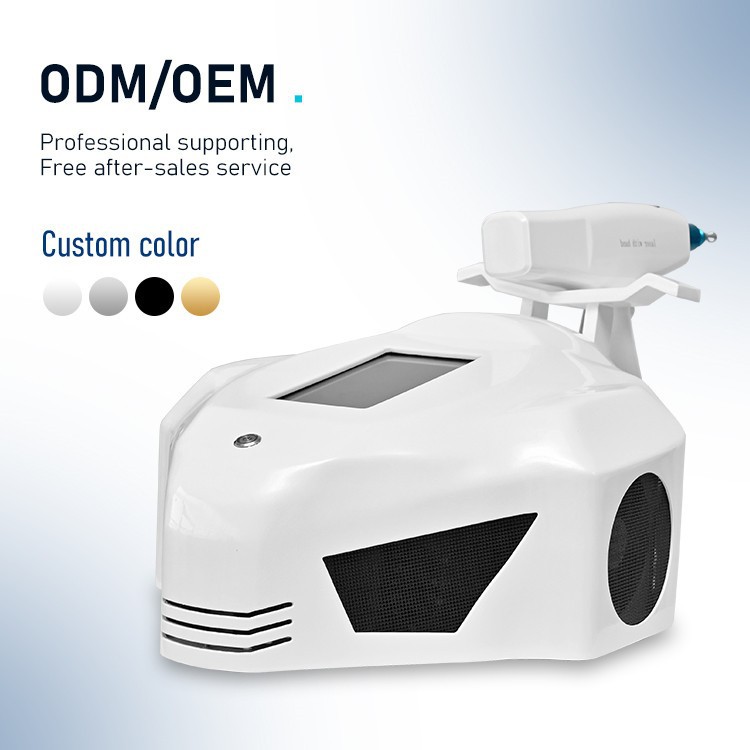
The ND YAG Q Switch Tattoo Removal Machine is specifically designed for this purpose. It uses the dual-wavelength technology I mentioned earlier to target both deep and superficial ink particles. The short pulse duration of the laser ensures that the ink is shattered into small fragments that can be gradually removed by the body's immune system. And because the laser can be precisely focused on the tattoo area, there's less risk of damage to the surrounding skin.
Pigmentation Removal
Nd YAG laser machines are also widely used for pigmentation removal. Whether it's age spots, freckles, or melasma, these machines can effectively target and break down the excess pigment in the skin. The Q Switch Laser Laser Pigenment Removal Machine is a great example of a machine that offers high accuracy in pigmentation removal.
The 532 nm wavelength is particularly effective for treating superficial pigmentation, while the 1064 nm wavelength can be used for deeper pigmentation. The ability to adjust the wavelength and pulse duration allows the operator to customize the treatment based on the type and severity of the pigmentation. This precision ensures that the pigment is removed without causing unnecessary damage to the surrounding skin, resulting in a more natural-looking and even skin tone.
Other Applications
In addition to tattoo and pigmentation removal, Nd YAG laser machines are used in other medical and industrial applications. In ophthalmology, for example, these machines are used for procedures like posterior capsulotomy, which involves using the laser to create a small opening in the back of the eye's lens capsule. The accuracy of the Nd YAG laser is essential in this procedure to ensure that the opening is created in the right place without causing damage to the surrounding eye tissue.
In the manufacturing industry, Nd YAG laser machines are used for precision cutting, welding, and marking of various materials. The high accuracy of the laser allows for detailed and intricate work, making it a valuable tool in many manufacturing processes.
So, to answer the question of how accurate an Nd YAG laser machine is, the answer is very accurate. Thanks to their dual-wavelength capabilities, short pulse durations, and high-quality beam characteristics, these machines can deliver precise and effective results in a wide range of applications.
If you're in the market for an Nd YAG laser machine for your business or practice, I'd love to talk to you more about our products. We offer a range of high-quality Nd YAG laser machines that are designed to meet the needs of different applications. Whether you're a dermatologist looking for a reliable tattoo removal machine or a manufacturer in need of a precision cutting tool, we've got you covered.
Don't hesitate to reach out if you have any questions or if you'd like to discuss your specific requirements. We're here to help you find the right Nd YAG laser machine for your needs and ensure that you get the most accurate and effective results.
References
- "Principles of Lasers" by Orazio Svelto.
- "Medical Laser Safety" by David Sliney and Michael Wolbarsht.
- Research papers on Nd YAG laser applications in dermatology and ophthalmology from peer-reviewed medical journals.