

In the realm of industrial manufacturing and product identification, plastic marking has become an essential process. It serves various purposes, from branding and product identification to providing essential information such as serial numbers, barcodes, and manufacturing dates. As a supplier of Nd:YAG Q-switch laser machines, I often encounter inquiries about the feasibility of using our machines for plastic marking. In this blog post, I will delve into the technical aspects of Nd:YAG Q-switch laser machines and explore whether they can be effectively used for plastic marking.
Understanding Nd:YAG Q-Switch Laser Machines
Nd:YAG (Neodymium-doped Yttrium Aluminum Garnet) is a popular laser medium known for its excellent lasing properties. Q-switching is a technique used to generate high-intensity laser pulses in a short period. By using a Q-switch in an Nd:YAG laser system, we can produce pulses with extremely high peak powers, which are ideal for various applications, including material processing.
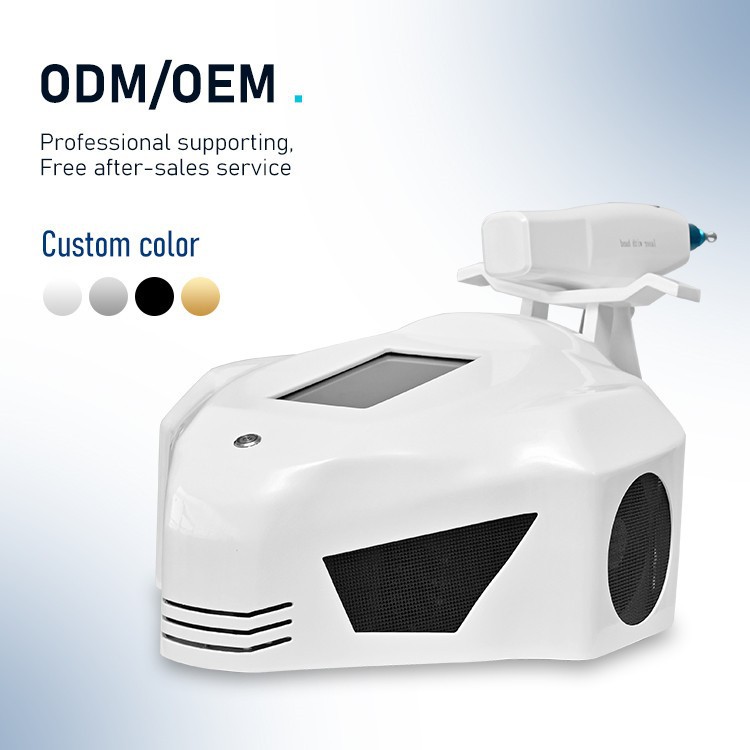
The Nd:YAG Q-switch laser machines we supply are designed to emit laser light at a wavelength of 1064 nm, which is in the near-infrared region. This wavelength is well-suited for interacting with a wide range of materials, including metals, ceramics, and some plastics. The high peak power of the Q-switched pulses allows for precise and efficient material removal or modification.
The Principle of Plastic Marking
Plastic marking can be achieved through different methods, such as engraving, foaming, and color change. The choice of method depends on the type of plastic, the desired marking effect, and the application requirements.
- Engraving: This method involves removing a small amount of plastic material to create a permanent mark. The high-energy laser pulses vaporize or ablate the plastic surface, leaving behind a visible groove or pattern. Engraving is suitable for creating deep, durable marks on plastics.
- Foaming: In this process, the laser energy heats the plastic to a point where it undergoes a phase change and forms bubbles. These bubbles create a raised or frosted appearance on the surface, which can be used for marking. Foaming is often used for creating high-contrast marks on transparent or semi-transparent plastics.
- Color Change: Some plastics can undergo a chemical or physical change when exposed to laser light, resulting in a color change. This method is commonly used for creating marks on plastics without removing or altering the surface topography. Color change marking is ideal for applications where a smooth and unaltered surface is required.
Can an Nd:YAG Q-Switch Laser Machine Be Used for Plastic Marking?
The answer is yes, an Nd:YAG Q-switch laser machine can be used for plastic marking, but the success of the marking process depends on several factors, including the type of plastic, the laser parameters, and the marking requirements.
Type of Plastic
Different plastics have different chemical and physical properties, which can affect their response to laser light. Some plastics, such as polycarbonate, acrylic, and ABS, are more amenable to laser marking than others. These plastics have a relatively high absorption coefficient at the 1064 nm wavelength of the Nd:YAG laser, which means they can efficiently absorb the laser energy and undergo the desired marking process.

On the other hand, some plastics, such as polyethylene and polypropylene, have a low absorption coefficient at 1064 nm, making them more difficult to mark with an Nd:YAG Q-switch laser machine. In such cases, alternative laser wavelengths or marking methods may be required.
Laser Parameters
The laser parameters, such as pulse energy, pulse width, repetition rate, and scanning speed, play a crucial role in determining the quality and effectiveness of the plastic marking. These parameters need to be carefully adjusted based on the type of plastic, the marking method, and the desired marking effect.
- Pulse Energy: The pulse energy determines the amount of energy delivered to the plastic surface in each laser pulse. Higher pulse energies are generally required for engraving and foaming, while lower pulse energies may be sufficient for color change marking.
- Pulse Width: The pulse width affects the interaction between the laser light and the plastic material. Shorter pulse widths result in higher peak powers, which can lead to more efficient material removal or modification. However, shorter pulse widths also require higher pulse energies, which may increase the risk of thermal damage to the plastic.
- Repetition Rate: The repetition rate determines the number of laser pulses delivered per second. Higher repetition rates can increase the marking speed, but they may also reduce the pulse energy and affect the quality of the marking.
- Scanning Speed: The scanning speed determines the speed at which the laser beam moves across the plastic surface. Faster scanning speeds can increase the marking efficiency, but they may also result in shallower or less distinct marks.
Marking Requirements
The marking requirements, such as the size, shape, depth, and contrast of the mark, also need to be considered when using an Nd:YAG Q-switch laser machine for plastic marking. For example, if a deep and durable mark is required, engraving may be the preferred method, while if a high-contrast mark on a transparent plastic is needed, foaming or color change marking may be more suitable.
Advantages of Using an Nd:YAG Q-Switch Laser Machine for Plastic Marking
- Precision: Nd:YAG Q-switch laser machines offer high precision and accuracy, allowing for the creation of detailed and intricate marks on plastics. The focused laser beam can be controlled to within a few micrometers, enabling the marking of small characters, logos, and barcodes.
- Non-contact Process: Laser marking is a non-contact process, which means there is no physical contact between the laser machine and the plastic material. This eliminates the risk of damage to the plastic surface and reduces the need for tooling or fixtures.
- Durability: Laser marks on plastics are permanent and resistant to wear, fading, and chemical corrosion. This makes them suitable for applications where long-term readability and durability are required, such as product identification and traceability.
- Versatility: Nd:YAG Q-switch laser machines can be used for a wide range of plastic marking applications, including engraving, foaming, and color change. They can also be used to mark different types of plastics, such as polycarbonate, acrylic, ABS, and more.
- Environmentally Friendly: Laser marking is a clean and environmentally friendly process that does not produce any harmful chemicals or waste. It is a sustainable alternative to traditional marking methods, such as inkjet printing and pad printing.
Applications of Nd:YAG Q-Switch Laser Machines in Plastic Marking
- Consumer Electronics: Nd:YAG Q-switch laser machines are widely used in the consumer electronics industry for marking plastic components, such as mobile phone cases, laptop keyboards, and remote controls. The high precision and durability of laser marks make them ideal for branding and product identification.
- Automotive Industry: In the automotive industry, laser marking is used for marking plastic parts, such as dashboards, door panels, and engine components. Laser marks can provide essential information, such as part numbers, serial numbers, and manufacturing dates, which are important for quality control and traceability.
- Medical Devices: Laser marking is also used in the medical device industry for marking plastic components, such as syringes, catheters, and surgical instruments. The non-contact and sterile nature of laser marking makes it suitable for applications where cleanliness and precision are critical.
- Packaging Industry: Nd:YAG Q-switch laser machines can be used for marking plastic packaging materials, such as bottles, containers, and labels. Laser marks can provide product information, such as expiration dates, batch numbers, and barcodes, which are important for product identification and inventory management.
Conclusion
In conclusion, an Nd:YAG Q-switch laser machine can be effectively used for plastic marking, provided that the type of plastic, the laser parameters, and the marking requirements are carefully considered. The high precision, non-contact nature, durability, versatility, and environmental friendliness of laser marking make it a popular choice for a wide range of plastic marking applications.
As a supplier of Nd:YAG Q-switch laser machines, we offer a range of products that are specifically designed for plastic marking. Our machines are equipped with advanced features and technologies to ensure high-quality and efficient marking results. If you are interested in using our Nd:YAG Q-switch laser machines for plastic marking, please feel free to [contact us] for more information and to discuss your specific requirements. We look forward to working with you to find the best solution for your plastic marking needs.
References
- Duley, W. W. (1999). Laser Processing and Analysis of Materials. Springer.
- Steen, W. M., & Mazumder, J. (2010). Laser Material Processing. Springer.
- Powell, J. (2015). Laser Marking: Principles and Applications. Wiley.